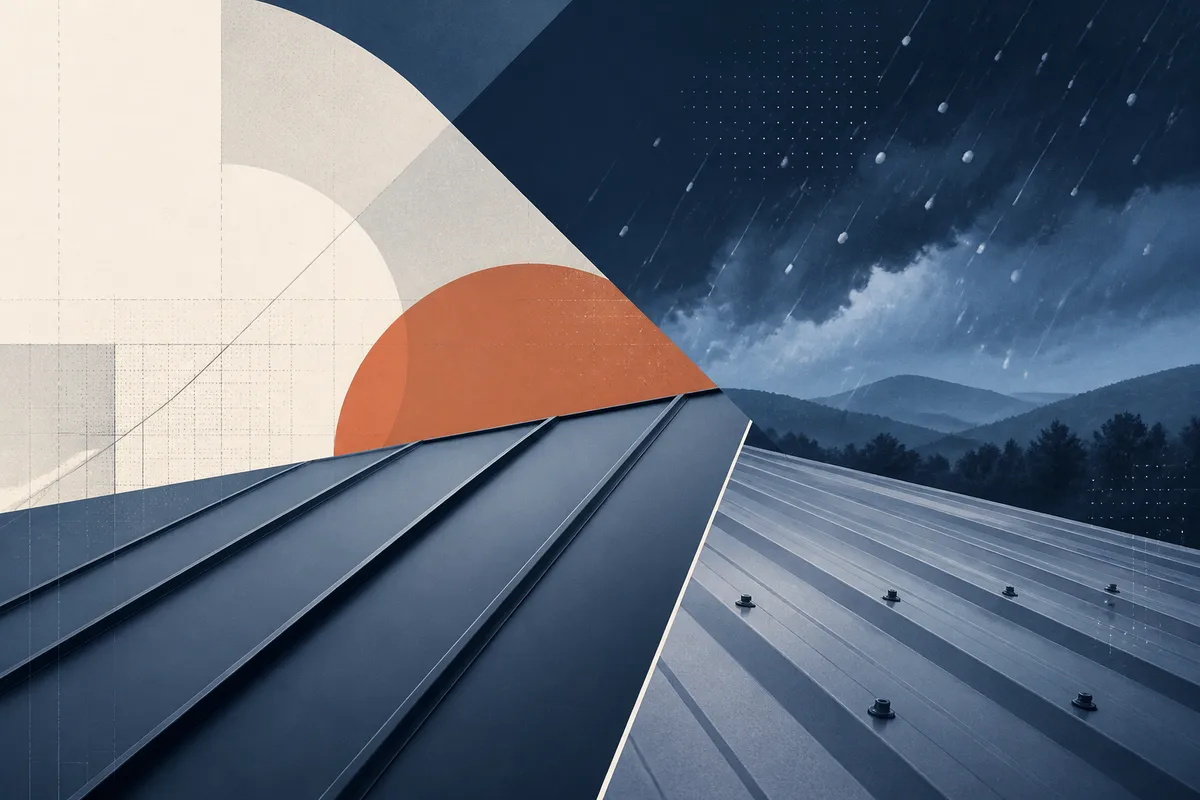
Standing Seam vs. Screw-Down: Which Metal Roof Survives Piedmont Hail Storms?
Homeowners in Charlotte often view metal roofing as a single, uniform category, but the spring storm season quickly exposes the mechanical differences between standing seam and screw-down panels. While both systems use steel, the method of attachment dictates how the roof reacts when a hail core hits the surface or when the sun drives temperatures into the high 90s. A roof that is pinned to the deck by thousands of exposed screws cannot move, leading to structural fatigue that standing seam systems are engineered to avoid.
This comparison breaks down the technical performance of standing seam vs screw down metal roof systems, focusing on impact resistance and long-term waterproofing. For property owners in the Piedmont region, understanding the physics of thermal expansion and fastener exposure is the difference between a 50-year asset and a 15-year maintenance liability.
Why Exposed Fasteners Fail in North Carolina Storms
The primary vulnerability of a screw-down roof is the penetration of the panel itself. In a region where temperature fluctuations are common, the metal constantly moves, creating specific failure points that hail and high winds exploit.
- Thermal expansion causes the metal panels to pull against fixed screws, eventually elongating the holes and breaking the neoprene washer seals.
- Exposed screw heads act as catch points for wind-driven debris and hail, increasing the likelihood of shearing or localized denting.
- The gaskets on exposed fasteners degrade under direct UV exposure, losing their elasticity and ability to seal against heavy rainfall.
- Over-tightened or under-tightened screws during installation create immediate weak spots that are the first to leak during a Piedmont thunderstorm.
The Engineering of Weather Resistance
1Protect the fastener from the environment
A Standing Seam Metal Roofing system uses a concealed clip method where the fasteners are tucked beneath the overlapping ribs of the panels. Because no screws pierce the weathering surface, there are no holes for hail to widen or for water to enter. This design ensures that the most vulnerable part of the roof—the attachment point—is never touched by the elements.
2Enable horizontal and vertical float
Metal expands and contracts significantly as it heats and cools. Standing seam panels are designed to "float" within their clips, allowing the entire surface to shift without tension. In contrast, exposed fastener metal roof problems often stem from the metal being pinned tight, which causes the panels to oil-can or buckle when they have nowhere to go. Standing seam metal roofs provide better durability and minimal maintenance compared to exposed fastener systems.
3Maximize gauge for impact resistance
Standing seam metal roofs require a thicker gauge of steel than is commonly used for screw-down panels. This extra thickness provides a higher threshold for impact, meaning a hailstone that might puncture or severely dent a thinner panel is less likely to compromise the finish of a standing seam system.
4Lock the seams against wind uplift
Standing seam panels are mechanically seamed or snapped together, creating a continuous structural unit. This locking mechanism prevents wind from getting under the edges of the panels, a common issue with screw-down roofs where the laps are only held by the friction of a screw. In high-wind events, the standing seam remains integrated, while individual screw-down panels can be lifted and peeled back.
The Mechanics of Thermal Movement
The Piedmont’s climate features hot summers and freezing winter nights, creating a cycle of constant movement for metal surfaces. When a metal roof is screwed directly into the wood decking, the metal wants to move but the wood does not. This creates a "sawing" effect where the metal edge of the hole grinds against the screw shank. Over time, a round hole becomes an oval, and even the best rubber washer cannot bridge that gap.
Standing seam solves this by using clips that allow the panel to slide. By accommodating this movement, the system avoids the structural stress that leads to "oil canning"—the wavy, distorted appearance often seen on lower-quality metal roofs. This flexibility is what allows the roof to maintain its water-tight integrity for decades rather than years.
How Queen City Metal Roofing helps
Navigating a roof replacement in the Charlotte Service Area involves a detailed assessment of the existing deck and the specific wind loads of the property. A standard scope of work should include an evaluation of the attic ventilation to prevent moisture buildup beneath the new metal panels. Property owners should expect a thorough inspection of the flashing around chimneys and valleys, as these are the most critical transition points for any metal system. For immediate assistance with a storm-damaged roof or to schedule a professional assessment, property owners can call (704) 828-7723. Professional installation ensures that the specific requirements for underlayment and clip spacing are met to maximize the lifespan of the chosen system.
Frequently asked questions
Can a screw-down metal roof be converted to standing seam later?
Converting a screw-down roof to a standing seam system typically requires a full tear-off down to the decking. Because the fastener patterns and panel widths differ significantly, you cannot simply install one over the other without compromising the structural integrity of the clips. It is more cost-effective to choose the long-term system during the initial installation rather than attempting a mid-life conversion.
Does hail damage standing seam roofs more easily than shingles?
While hail can cause cosmetic dimples on any surface, standing seam metal is far less likely to suffer functional failure compared to asphalt shingles. Shingles lose their protective granules upon impact, leading to rapid UV degradation, whereas high-quality steel maintains its structural seal. Most insurance providers recognize this durability, though you should check your specific policy for cosmetic damage waivers.
How often do the screws on a screw-down roof need to be replaced?
Fasteners on an exposed fastener roof require regular inspection and maintenance because the neoprene washers eventually dry rot and crack due to intense sun and heat. Failing to address degrading fasteners can lead to widespread leaks, even if the metal panels themselves still look new. Regular maintenance is essential to reach the full potential of an exposed fastener system.
Is standing seam significantly louder during a Charlotte rainstorm?
The sound of rain on a metal roof is largely determined by the solid decking and insulation beneath it, not the type of panel. If a standing seam roof is installed over a solid substrate with proper underlayment, the noise level is comparable to traditional shingles. The "drumming" effect people associate with metal roofs usually occurs in agricultural buildings where the metal is installed over open purlins without a deck.
What is the typical lifespan difference between these two systems?
According to Mar Building Solutions, a standing seam roof lasts 40–60 years, while a screw-down roof lasts 15–25 years. The difference in longevity is primarily due to the concealment of fasteners in standing seam systems, which prevents the environmental degradation and leak points common in exposed fastener panels. For owners planning to stay in their home long-term, the lower lifecycle cost of standing seam often outweighs the higher upfront investment.
What happens when you get in touch: you describe the situation, we ask the few questions that actually change the answer, and you get a clear scope and next step — no obligation.