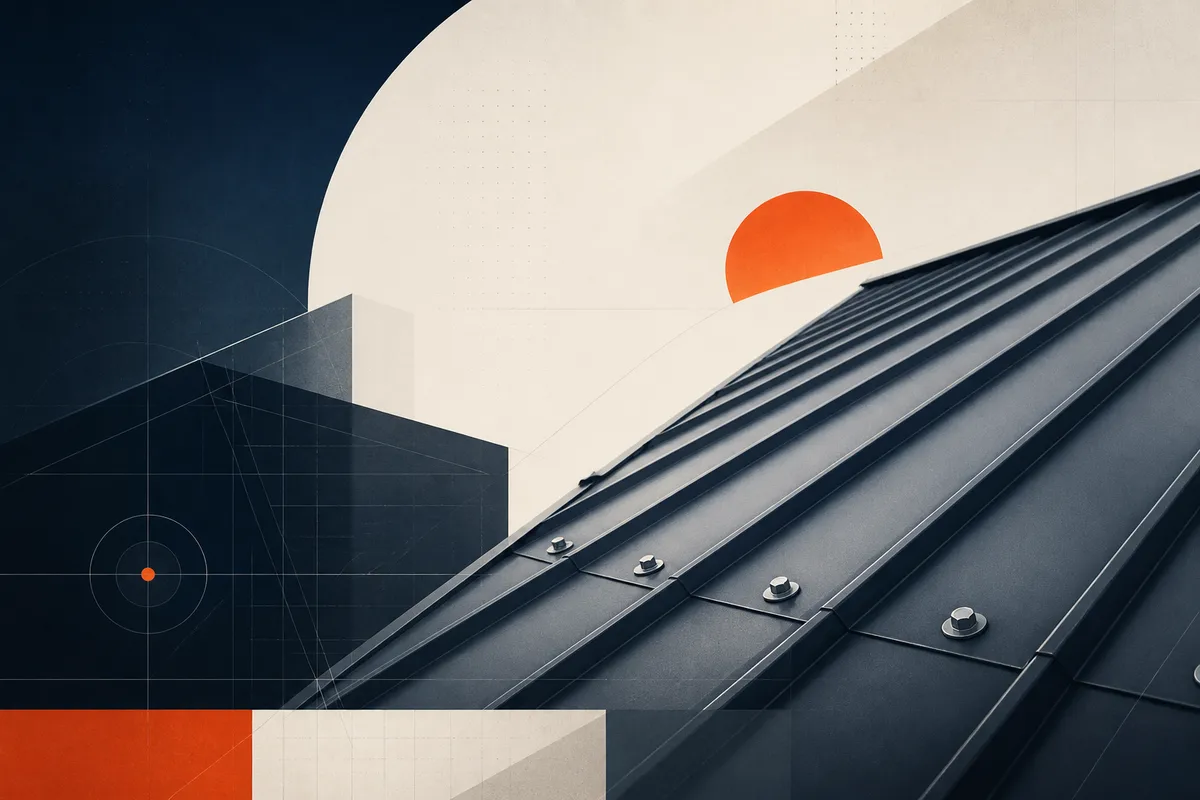
The 10-Year Maintenance Cycle for Exposed Fastener Metal Roofs
Most homeowners choose metal for its longevity, yet many are surprised when a "40-year" roof begins leaking in year twelve. The failure point is rarely the steel panel itself; it is the thousands of rubber washers and screws holding those panels to the structure. In the Piedmont region, the intense sun cooks the elasticity out of these seals, turning a flexible gasket into a brittle, cracked ring that invites moisture intrusion.
This guide details why the 10-year mark is the critical window for metal roof screw replacement in Charlotte and how to identify the early warning signs of fastener fatigue. Property owners with exposed fastener systems must understand the physical mechanics of thermal movement to avoid premature deck failure and internal water damage.
Why Piedmont Weather Accelerates Fastener Failure
The transition from cool nights to humid, 90-degree days causes metal panels to expand and contract significantly. This constant movement places immense shear stress on the fasteners, leading to three specific mechanical failures:
- The "backing out" effect where the screw slowly unscrews itself from the wood purlin due to panel vibration and movement.
- UV degradation of the neoprene washer, which shrinks and cracks, breaking the watertight seal against the metal rib.
- The widening of the original screw hole in the steel panel, which eventually allows water to bypass even a seated screw.
The Playbook for Professional Fastener Maintenance
Maintaining a Screw-Down Metal Roofing system requires more than just tightening loose bolts. A standardized approach ensures the replacement actually seals the penetration rather than just covering it.
1Perform a "Drag Test" on Neoprene Seals
A technician should inspect the perimeter of the washers for visible dry rot or thinning. If a washer can be easily flaked away with a fingernail or shows a "spiderweb" cracking pattern, the seal has already failed, even if a leak hasn't manifested in the attic.
2Identify Over-Driven and Under-Driven Screws
Fasteners must be driven perfectly perpendicular to the panel with the washer slightly compressed. Screws driven at an angle or buried too deep into the metal create a cup that holds water, while under-driven screws allow the panel to flutter in the wind, widening the hole.
3Use Oversized Replacement Fasteners
When a screw is removed, the original hole in the wood decking is often slightly stripped or enlarged. Standard practice involves using a #12 or #14 diameter screw to replace a standard #10 screw, ensuring the new threads bite into fresh wood for a secure, long-term grip according to industry insights on replacing metal roof screws.
4Clear the Debris Field
Rust often forms around the puncture site if the original screw's zinc coating has failed. Before installing new fasteners, the area around the hole must be cleaned to ensure the new EPDM or neoprene washer creates a flush, vacuum-like seal against the metal surface.
The Physics of Leaking Roof Screws
The primary reason for failure is that metal and wood do not expand at the same rate. As the sun heats a metal panel, it can reach temperatures significantly higher than the ambient air, causing the metal to grow in length. Since the screw is fixed into the wood substrate below, the metal panel pushes against the shank of the screw.
Over a decade of seasons, this creates a "wallered out" hole. The screw remains stuck in the wood, but the hole in the metal becomes an oval. Once the neoprene washer loses its flexibility due to age, it can no longer bridge the gap of that elongated hole. According to data regarding the lifespan of roofing screws, this degradation is the most common cause of reported leaks in older metal installations.
How Queen City Metal Roofing Helps
Addressing fastener fatigue requires a systematic audit of the entire roof surface, as a single failed washer can lead to localized wood rot. A typical scope of work for this type of maintenance involves a full penetration count, removal of aged fasteners, and the installation of high-quality replacement screws with improved UV-resistant washers. Property owners in Charlotte can initiate this process by calling (704) 828-7723 for a professional assessment. For those managing multiple properties or larger structures, requesting a detailed site evaluation via https://metalroofingincharlotte.com/ is the standard first step to establishing a long-term maintenance schedule.
Frequently asked questions
Can I just put caulk over a leaking screw?
Caulk is a temporary fix that usually fails within a single season due to the extreme temperature swings of metal panels. Silicone or acrylic sealants do not bond permanently to weathered neoprene or oily metal surfaces, and they often trap moisture against the screw head, accelerating rust. The only permanent solution is to replace the fastener with an oversized screw designed for repair.
How do I know if my screws are "backing out"?
You can often see the shadow of the screw head from the ground, or notice that some screws appear higher than others along a horizontal row. If you can see the silver shank of the screw between the head and the metal panel, the screw has lost its grip on the wood decking. This often results in a rhythmic "banging" or "popping" sound during high winds in the Charlotte area.
Do all metal roofs have this 10-year screw issue?
No, this issue is specific to "exposed fastener" or screw-down systems where the screws are visible on top of the panels. Standing seam systems use hidden clips and do not have thousands of exposed penetrations, which is why they generally require far less maintenance over their lifespan.
What happens if I ignore the 10-year maintenance window?
If neglected, the small amount of water seeping through cracked washers will eventually rot the wood purlins or OSB decking beneath the metal. Once the wood is soft, the screws lose all withdrawal resistance, and the roof becomes susceptible to wind uplift. By the time you see a brown spot on your ceiling, the structural wood beneath the metal may already require replacement.
Is screw replacement covered by most warranties?
Most standard material warranties cover the paint finish on the metal panels, but not the labor or the peripheral fasteners. Neoprene washers are widely considered a "wear item" in the roofing industry, much like tires on a car, and require periodic replacement to maintain the integrity of the overall system.
What happens when you get in touch: you describe the situation, we ask the few questions that actually change the answer, and you get a clear scope and next step — no obligation.